
Skip know-how
Rear-door skips: why loading stops being the hard part
The single design choice that makes the most difference to a skip hire job has nothing to do with the size of the bin.
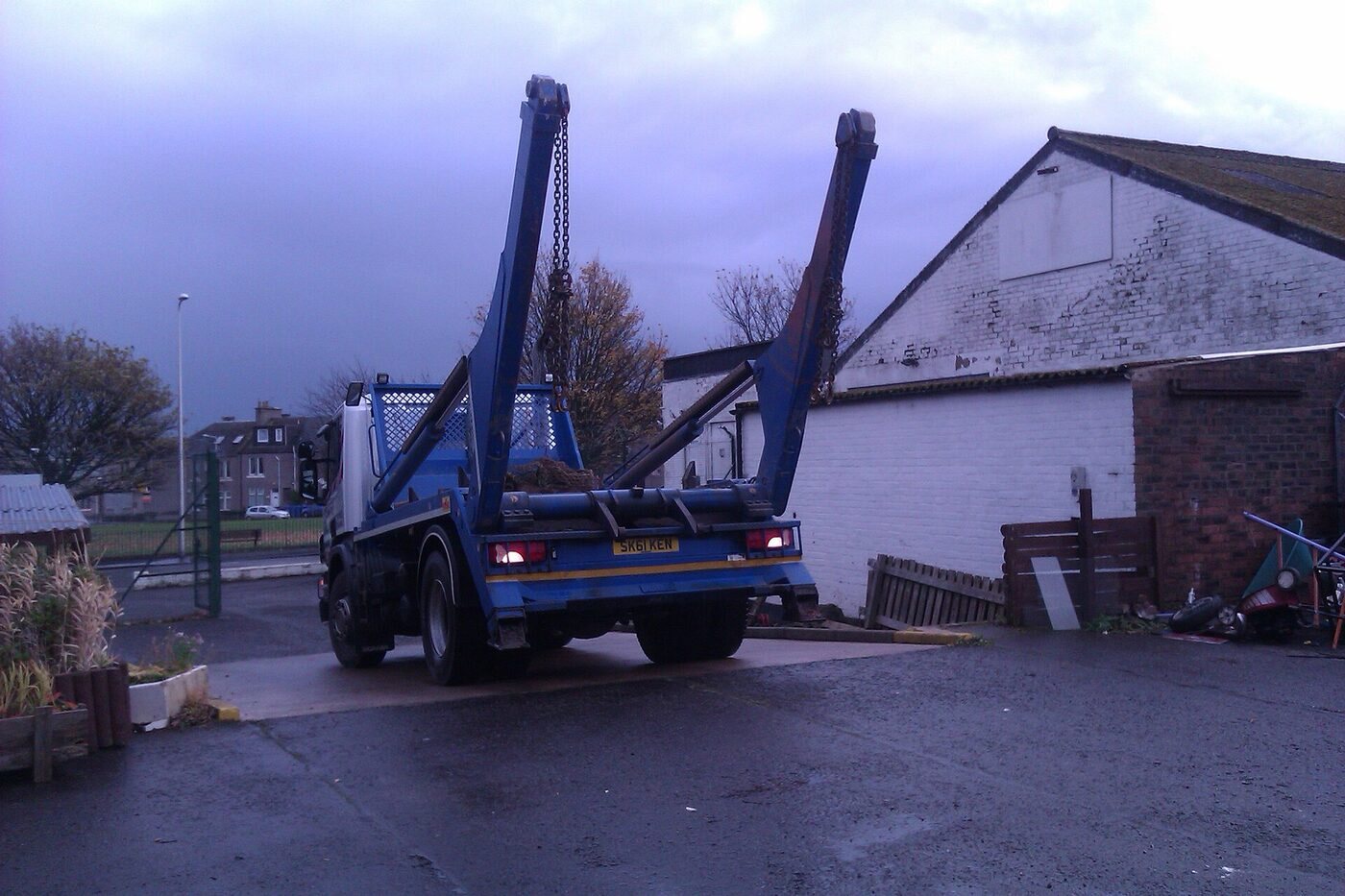
The problem with a fixed wall
A skip bin is, at its simplest, a steel box with four walls. Load it over the side and you are lifting everything from ground level to roughly waist or chest height, then letting go. Do that a hundred times with bags of garden waste, broken plasterboard or the back of a couch and you have a slow, sore, occasionally dangerous afternoon.
The load also stacks badly. Everything thrown over the side piles in the middle, and the bin fills into a mound long before the corners are used. You pay for seven cubic metres and use four.
What a rear door changes
Every skip we run has rear doors that swing open. That single change turns the loading problem into a walking problem: you wheel the barrow to the back of the bin, tip it in, and walk back. No lifting over a wall, no balancing a bag on an edge, no scraping a mattress across galvanised steel.
It also changes how the bin packs. A couch slides in flat. A stack of gib goes down at the front and gets built up behind it. Timber lengths, bench sections, bed frames — all of it goes in end-first through an open back rather than over a lip. A well-loaded skip is a meaningfully larger skip in practice, which means you can size down and pay less for the same job.
If you are not sure what you need, start with the service list — it covers every size we run plus rubbish removal, single-item disposal and cage trailer hire. Or ring 027 446 1253 and describe the job.
It matters more on a tight site
On a suburban driveway the rear door is the difference between a tidy job and an excuse to call in a friend. If the skip is on the street, the door has to face the house so you are not hauling rubbish across a road. We place the bin with the rear door toward the way in whenever the access allows it.
This is also part of why we run smaller trucks. A large truck needs a large turn, a wide street and a clear run-in. Our smaller skip loaders can get down narrower driveways and tighter streets, get close enough to place the bin properly, and get out again without scraping a fence. In Christchurch, where so many properties sit behind a shared driveway or a narrow access, that is often the difference between a skip arriving and a skip not arriving.
Loading safely, still
Walk-in loading does not mean careless loading. Keep the load level with the rim so nothing protrudes above the top edge, put heavy material in first and low, and spread it rather than dropping it in one spot. If you are loading loose material, wear gloves — bin edges are steel, and the contents were not designed to be friendly.
Do not climb inside the bin to compact the load. If you need to compact, that is a sign the bin is the wrong size, and swapping up is easier than an injury. Ring us and tell us the truth about the load.
It is included, not an extra
Rear-door loading is not a premium feature on our bins. It is how all four sizes — 2m³, 4.5m³, 6m³ and 7m³ — are built, from the mini through to the maxi.
If you want to talk it through, ring 027 446 1253. We deliver across Christchurch and Canterbury from Hornby, Monday to Friday, 7:30am to 7:30pm, and we will help you pick the size that your access and your rubbish actually need.
The other half of the job: getting the truck in
A rear door only helps if the bin can get there. Before a skip is delivered we want to know three things: how the truck reaches the property, where the bin is allowed to sit, and what is in the way. Overhead wires, a low gate, a shared driveway used by the neighbours, a street with a speed bump, a turning circle that is too tight for a long vehicle — all of it is worth mentioning on the first call.
That is where running smaller trucks earns its keep. A large skip truck needs a long straight run-in, a wide street and a turning space that most older Christchurch properties simply do not have. Our smaller loaders can work their way down a narrow driveway, reverse into a tight court, place the bin and come back out without touching a fence.
It also means the bin can go where it is genuinely useful. Put it on the back section and you are twenty steps from the back door instead of twenty metres from the front. Put it on the street and the rear door faces the property, so you are not dragging rubbish across a road every trip.
Tell us about the access and we will plan the drop around it. It is a thirty-second conversation that prevents a wasted trip.
Keep reading
Where this applies
4.5m³ Small Skip
The step up from the mini. Fits furniture, boxes, old carpet and light building waste while still sitting comfortably on a normal driveway.
Details6m³ Mid Skip
The all-rounder. Kitchen and bathroom strip-outs, timber and gib offcuts, builder's waste — sized for a real renovation rather than one room.
Details7m³ Maxi Skip
Our largest bin. Full house clearances, major renovations and bulky demolition material — enough volume to do the job in a single hire.
DetailsTrailer Hire
Prefer to do the run yourself? Hire a cage trailer with mesh sides and tandem wheels for garden waste, firewood, moving gear or a tip run.
Details